Real Repairs, Real Solutions
Actual repairs performed by Bolt Auto Care technicians
A brake warning light on your dashboard can be concerning. Most drivers naturally assume that when their vehicle displays a message saying “Brake Pads Worn,” it's time for new brakes.
But that's not always the case.
Recently, a 2016 Jaguar XF All-Wheel Drive came into Bolt Auto Care in Gainesville, Texas, displaying a brake pad warning. What initially appeared to be a routine brake replacement turned out to be something entirely different.
And thanks to a thorough inspection, we were able to identify and correct the actual problem without replacing otherwise serviceable brake pads.
The Concern: “Brake Pads Worn”
With approximately 51,471 miles on the odometer, this Jaguar XF displayed an amber brake warning accompanied by the message:
“Brake Pads Worn.”
The warning suggested the vehicle needed brake attention, but the message alone couldn't tell us whether the brake pads were actually worn out or whether another problem was responsible.
Instead of immediately recommending new brakes, our technicians began with a physical inspection and diagnostic evaluation.
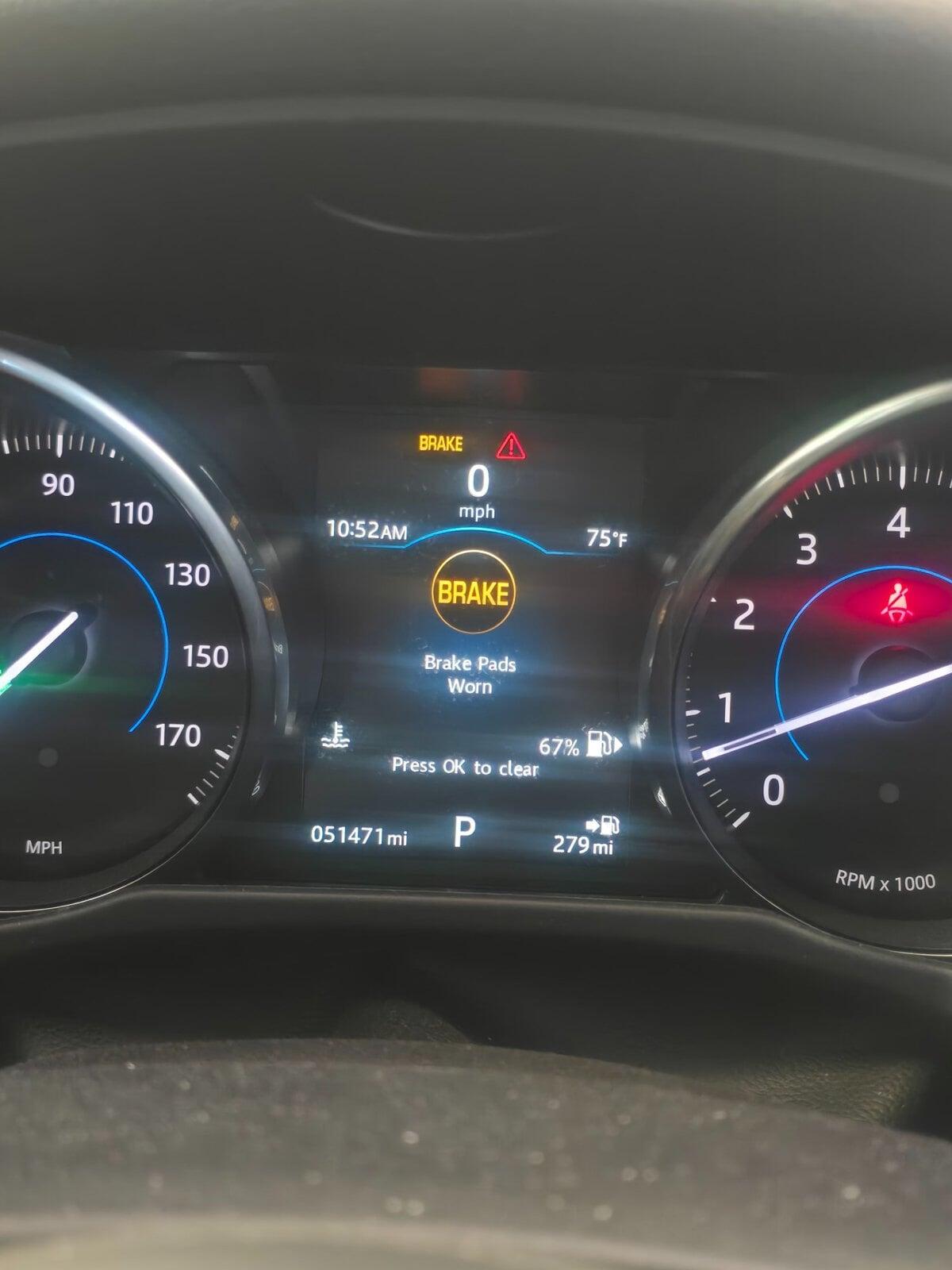
The Jaguar's instrument cluster displayed “Brake Pads Worn,” prompting a closer inspection of the braking system.
The Inspection: The Brake Pads Still Had Life Left
Our inspection revealed the following measurements:
Front brake pads: 9 mm
Rear brake pads: 6 mm
Brake fluid level: Acceptable
Brake-related diagnostic trouble codes: None reported
Based on these findings, the measured brake pads had remaining usable material.
But the warning was still present.
That raised an important question: Why was the vehicle reporting worn brake pads when our measurements indicated otherwise?
The next step was inspecting the brake pad wear sensor system.
The Discovery: A Damaged Rear Brake Wear Sensor
Modern vehicles often use electronic brake pad wear sensors to alert drivers when the brake pads approach their replacement limit.
These sensors work through an electrical circuit that can trigger a dashboard warning when interrupted.
During our inspection, we discovered that the passenger-side rear brake pad wear sensor wiring was severely damaged, with the wire frayed and broken.
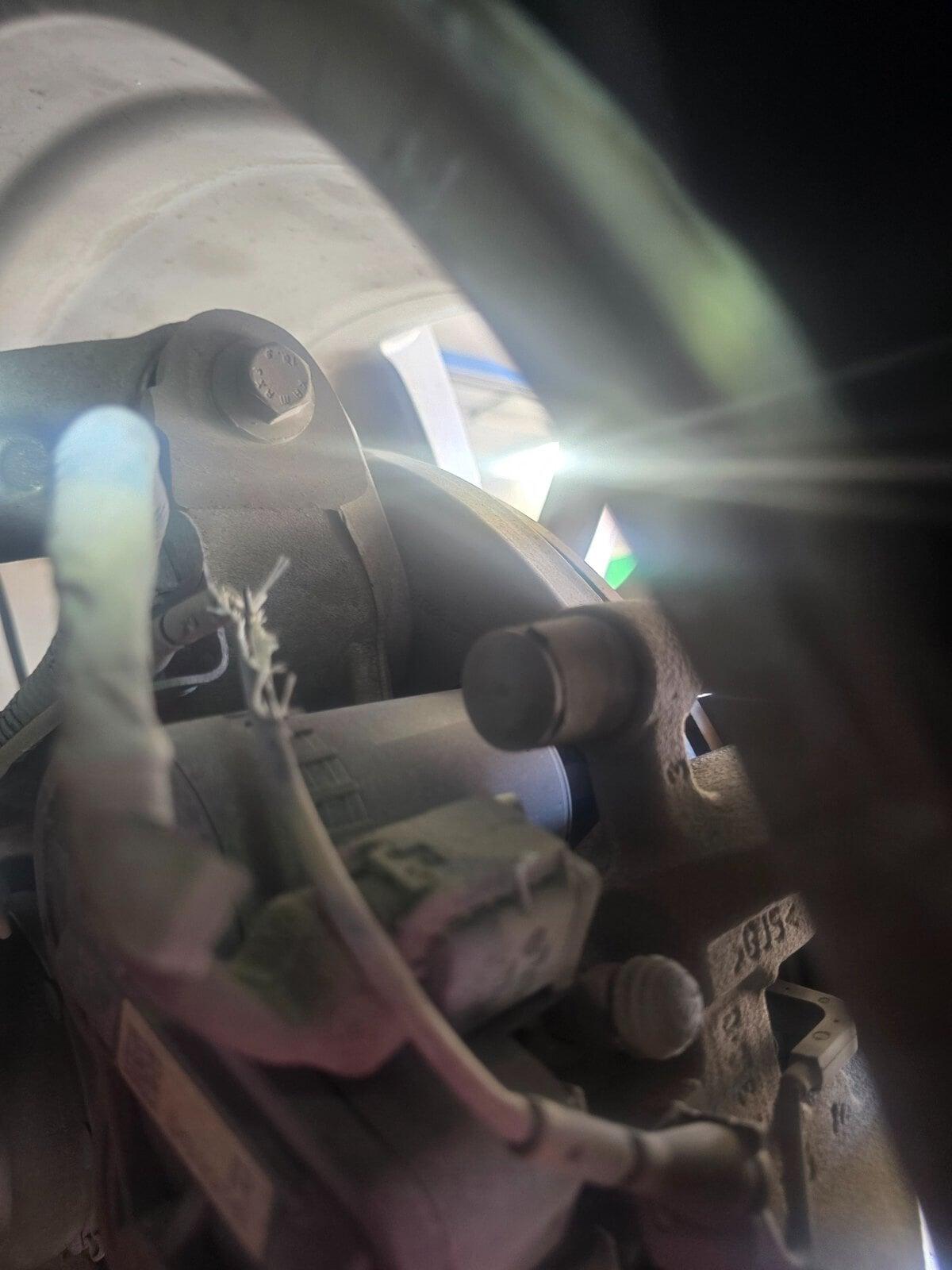
The damaged brake pad wear sensor wiring was the source of the Jaguar's brake warning, even though the measured brake pads still had usable material.
The damaged sensor circuit was causing the Jaguar to report worn brakes.
Interestingly, our diagnostic scan did not reveal any conventional brake-related trouble codes. That's because a brake pad wear warning doesn't necessarily result in a stored diagnostic trouble code.
The physical inspection revealed what the dashboard message alone couldn't.
The Repair: Replacing the Damaged Sensor
With the cause identified, our technician replaced the damaged passenger-rear brake pad wear sensor.
After installing the replacement sensor:
The brake warning lights went out.
The “Brake Pads Worn” message was no longer displayed.
A short road test was completed to verify the repair.
A follow-up diagnostic check confirmed there were no lingering trouble codes.
The repair was successful, and the customer's original concern was resolved.
No unnecessary brake pad replacement was required to correct the warning.
Why Accurate Diagnosis Matters
This repair illustrates why it's important to investigate a vehicle warning rather than immediately replace the component mentioned in the message.
The Jaguar wasn't wrong to alert the driver to a problem with the brake wear monitoring circuit. But the warning alone didn't explain the actual cause.
A damaged sensor wire can produce the same warning as a brake pad that has reached its wear limit.
Without inspecting the system, it would have been easy to assume the vehicle simply needed new brakes.
At Bolt Auto Care, our goal is to identify the underlying problem, explain our findings, and recommend repairs based on the vehicle's actual condition.
Sometimes the answer is a complete brake service. Other times, as with this Jaguar, it's a damaged sensor.
Good automotive service starts with understanding the problem—not guessing at the solution.
Brake Warning Light On? Let Bolt Auto Care Take a Look.
If your vehicle is displaying a brake warning, don't ignore it. Whether the cause is worn brake pads, a damaged sensor, or another braking system concern, identifying the actual problem is the first step toward a proper repair.
Bolt Auto Care provides automotive diagnostics, brake inspections, preventive maintenance, and repair services for drivers in Gainesville, Texas, and surrounding communities.
Visit www.boltautocare.com to schedule your next service.
Real Repairs, Real Solutions is a Bolt Auto Care series featuring actual vehicles, real diagnostic findings, and completed repairs from our shop in Gainesville, Texas.